What lessons can be learned from the activities following the European Capitals of Culture Chemnitz 2025 title year?
Over three days last week, a delegation from Southern Estonia visited Chemnitz as part of ECoC Echo, a European Capitals of Culture legacy project led by Tartu 2024. The delegation learned about the activities of European Capital of Culture Chemnitz 2025 following the title year, aimed at preserving the achievements and impact of the European Capital of Culture year in Chemnitz and the surrounding region beyond the end of the title year and continuing to use them as a driver for regional development.
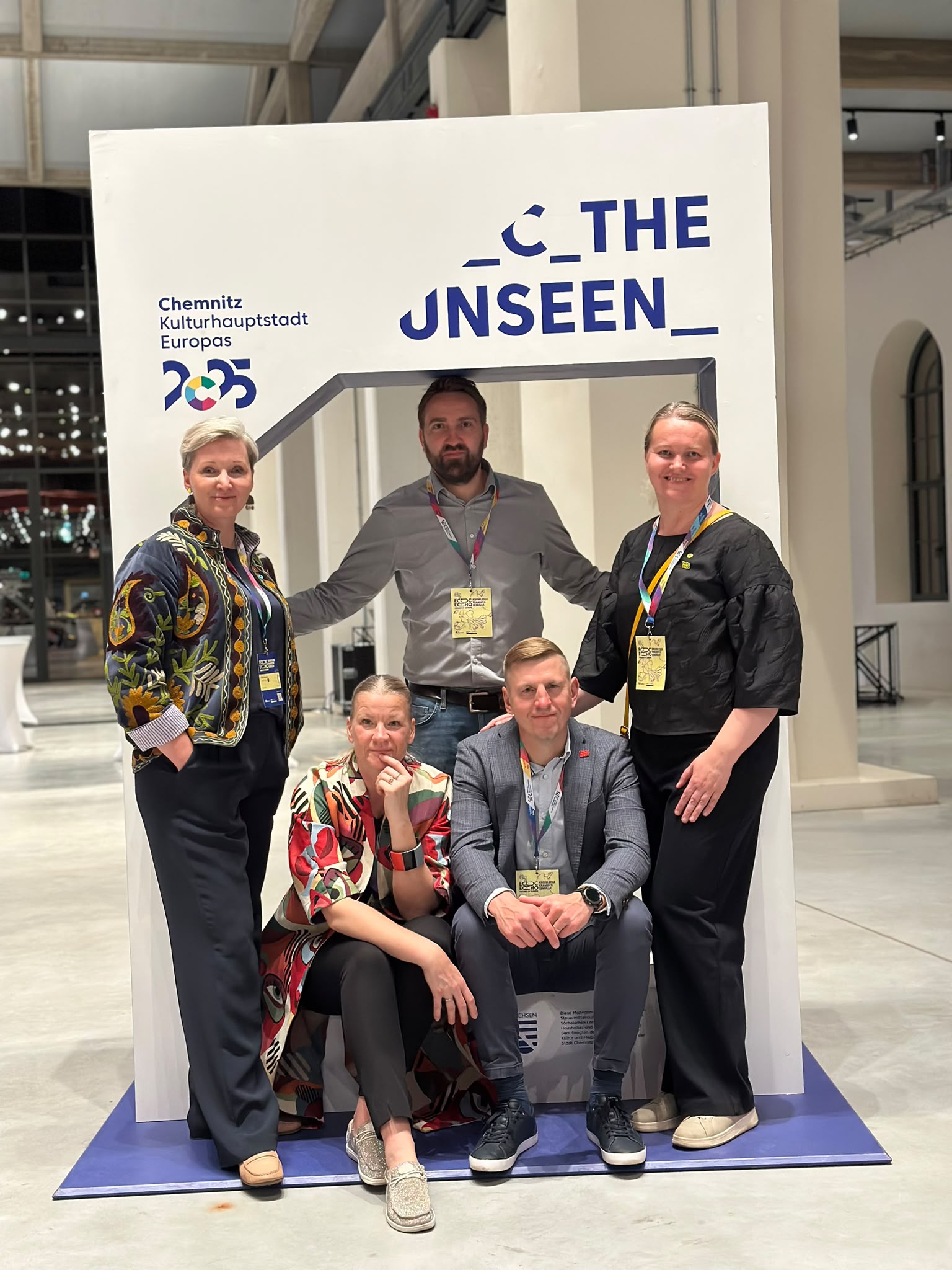
Over three days last week, a delegation from Southern Estonia visited Chemnitz as part of ECoC Echo, a European Capitals of Culture legacy project led by Tartu 2024. The delegation learned about the activities of European Capital of Culture Chemnitz 2025 following the title year, aimed at preserving the achievements and impact of the European Capital of Culture year in Chemnitz and the surrounding region beyond the end of the title year and continuing to use them as a driver for regional development.
Approximately 50 representatives from the fields of politics, culture, business and public administration took part in the knowledge-sharing seminar. Participants came from Chemnitz as well as from European Capitals of Culture Leeuwarden 2018, Novi Sad 2022, Veszprém 2023, Tartu 2024, Oulu 2026, Liepāja 2027, Évora 2027 and Bourges 2028. The aim was to gain a deeper understanding of the strategic legacy activities and future plans of European Capital of Culture Chemnitz 2025.
The Estonian delegation included Tartu Deputy Mayor Ulla Preeden, Head of the Association of Municipalities of Tartu County Sven Tobreluts, Head of Võru County Development Centre Tiit Toots, Tartu 2024 CEO Annela Laaneots, and Tartu 2024 Development Manager and ECoC Echo Project Lead Sille Talvet-Unt.
During the three-day conference programme, participants held strategic discussions on how to preserve the achievements made during the European Capital of Culture year and build on them for future development. The gathering provided an opportunity to analyse the transition from the title year, through the bridge year, towards long-term urban and regional development.
Throughout the conference, participants exchanged experiences about what had worked well during their respective European Capital of Culture years and what lessons future Capitals of Culture could learn from the challenges encountered.
One of the key topics was the evaluation of research conducted by Chemnitz University of Technology before, during and after the title year. Participants discussed how data was collected and surveys were conducted in order to generate evidence-based findings and identify correlations.
In addition, participants visited the “Stadtwirtschaft” and “Hartmannfabrik” sites created as part of European Capital of Culture Chemnitz 2025, as well as the Ore Mountains region, including Oelsnitz and Leukersdorf. These visits helped participants gain a better understanding of the Chemnitz 2025 legacy process.
While exploring the Capital of Culture region, participants discussed what measures could be taken to connect the many municipalities through tourism while at the same time highlighting the uniqueness and strengths of each area. Particular attention was paid to the development of the Maker Hubs in Chemnitz – from the initial idea and its implementation to their future use. Strategies were also shared on how to ensure the long-term sustainability of such projects, for example by establishing new structures.
Sille Talvet-Unt, ECoC Echo Lead Coordinator and representative of the Tartu 2024 Foundation, said at the conference: “By bringing together European Capitals of Culture and regional and local authorities at different stages of their European Capital of Culture journey, the project facilitates the exchange of knowledge and practices, supports the creation of policy instruments and a knowledge-sharing toolbox, and strengthens European cultural and regional cooperation.”
The nine-European-Capital-of-Culture cooperation project ECoC Echo, led by Tartu 2024 and supported by Interreg Europe, was launched in 2025. The aim of the project is to maintain and further strengthen the momentum for regional development generated during the European Capital of Culture title year.